

Why SWTOR Survived by Becoming a Story-First MMO
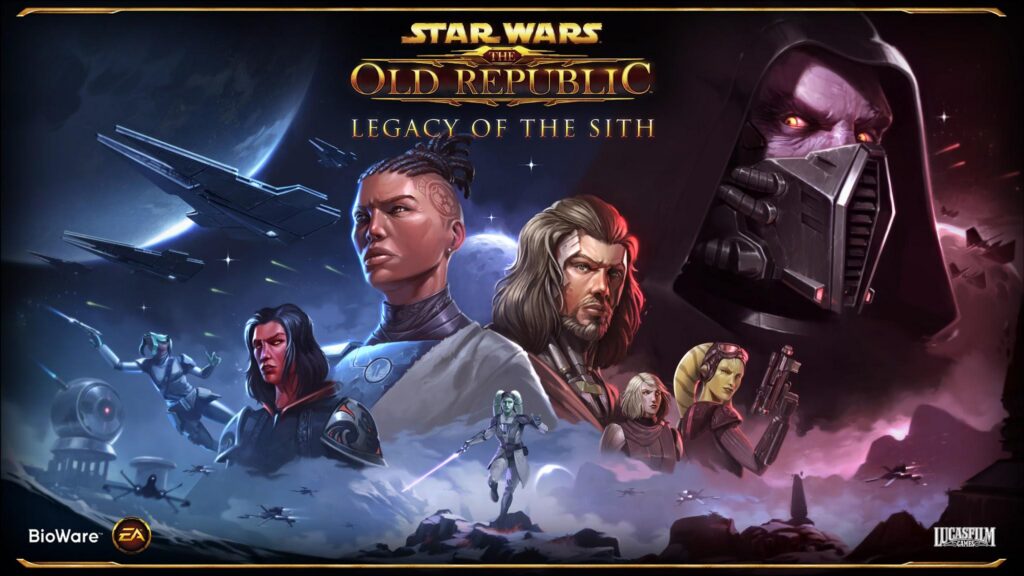
The Old Republic did not win the MMO arms race. It found a different reason for players to come back.
By Søren Ahrensborg Kamper
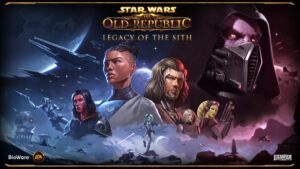
Star Wars: The Old Republic did not survive by becoming the biggest MMO in the room. It survived by becoming comfortable with the fact that, for a large part of its audience, the most important person in the galaxy was not standing in a raid group. They were standing in a dialogue scene, deciding whether to forgive a companion, betray an ally or say something catastrophically sarcastic to a Sith Lord. That is a strange outcome for a 2011 subscription MMO, but it is also why SWTOR remains interesting. Its long life increasingly came from treating the persistent world as a delivery system for personal Star Wars stories rather than as an endless contest to produce more endgame.
A 2025 rundown of the most played MMOs picked up on exactly that tension, noting that SWTOR was still hanging on through its storylines even as newer and larger online games competed for attention. That observation gets to the heart of the game better than raw population numbers ever could. SWTOR has raids, PvP, guilds and all the usual MMO furniture, but the thing that makes someone reinstall it after three years is often much smaller: an unfinished class story, a favourite companion, a romance they never saw through, or the suspicion that the Imperial Agent storyline might still be the best spy drama Star Wars has accidentally produced.
The class story was always SWTOR's unfair advantage
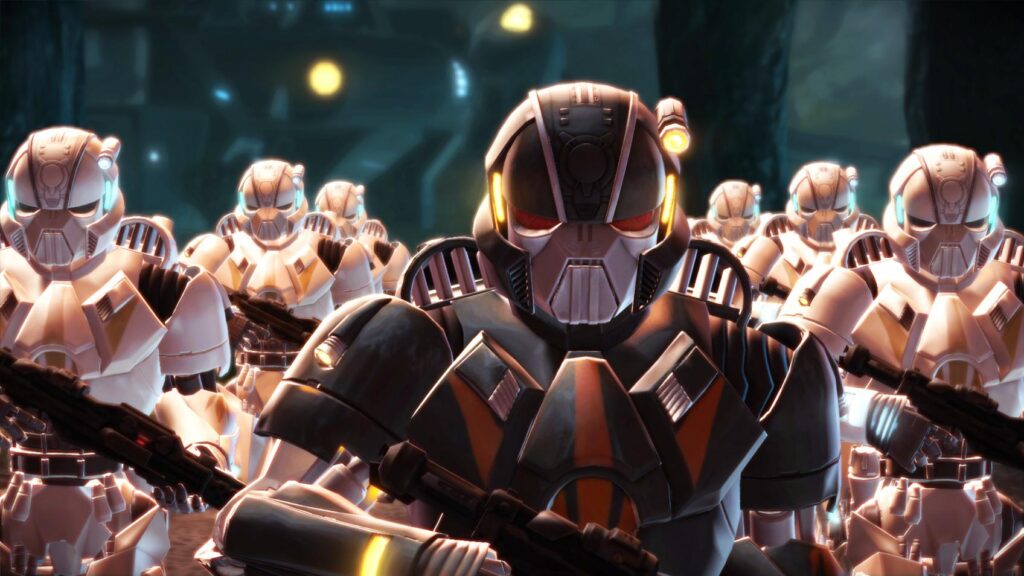
BioWare built the original game around eight class stories, each fully voiced and each trying to sell a different fantasy. A Jedi Knight gets heroic space opera. A Bounty Hunter gets contracts, rivals and professional violence. The Imperial Agent spends a suspicious amount of time discovering that working for an authoritarian intelligence service may have downsides. The important part is that these identities are mechanical as well as narrative. Your class determines who speaks to you, which companions join you, which moral pressures matter and what sort of Star Wars story the game thinks you are living.
That is why the game has always had more in common with BioWare’s single-player RPGs than the phrase ‘World of Warcraft competitor’ ever suggested. A Mass Effect Legendary Edition review makes a similar case for Mass Effect: its real staying power comes from characters, loyalty and the feeling that the crew becomes personal. SWTOR works on the same emotional circuitry. Combat rotations change. Gear becomes obsolete. A companion who has spent fifty hours commenting on your terrible decisions is harder to replace.
The turning point was admitting that solo players were not doing it wrong

The game’s clearest shift came with Knights of the Fallen Empire in 2015. BioWare openly described the expansion as a renewed focus on cinematic, BioWare-style storytelling, delivered through chapters with companions and player choice at the centre. The older levelling path was streamlined, story content became easier to follow, and more group activities gained solo-friendly options. This did not remove the MMO. It changed the order of importance. You could enter SWTOR because you wanted a Star Wars RPG first, then decide later whether Operations, PvP or organised guild life interested you.
That matters because traditional MMOs are greedy with time. Their most memorable systems often depend on schedules, social coordination and the quiet assumption that Tuesday evening belongs to the raid leader now. SWTOR gradually offered another rhythm. A returning player could subscribe, play a chapter, rebuild a relationship with a companion, finish an old planet arc and leave again without feeling that the entire game had rejected them for failing to maintain perfect attendance. The game became less like a second job and more like a long-running television series where your character had somehow been given the remote.
Companions turned persistence into memory
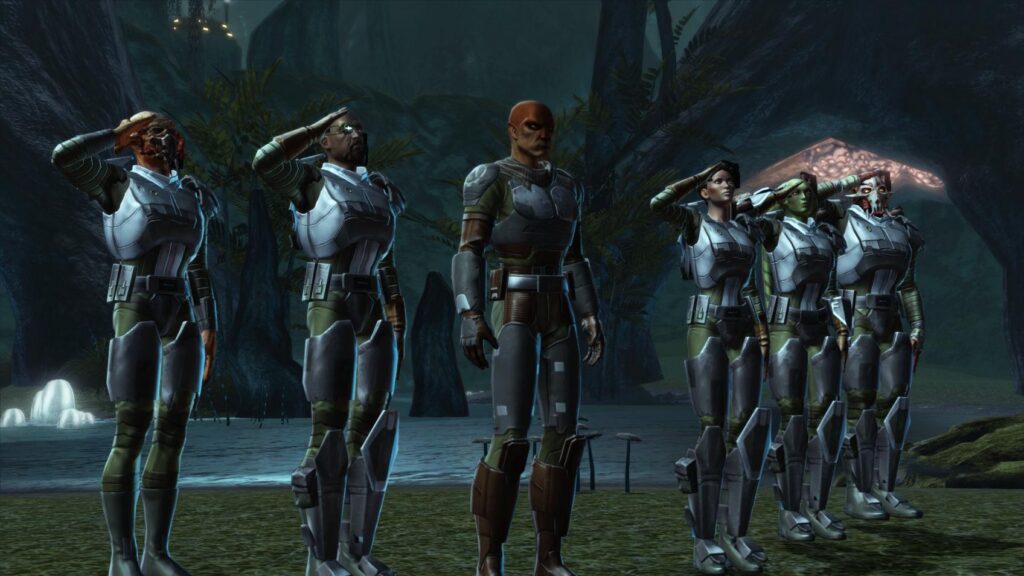
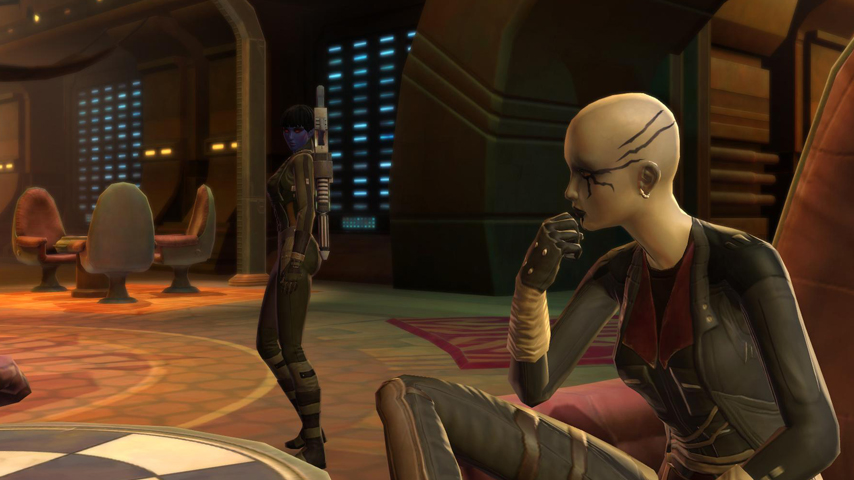
Companions are crucial to that structure because they make the world remember the player in a way loot cannot. They approve, disapprove, disappear, return, change sides and occasionally force the player to confront decisions made years earlier. Later systems made companions more flexible in combat, but their real value was never whether they healed efficiently. It was that they gave continuity to a game that otherwise had to keep reinventing itself through expansions. The galaxy could change, the level cap could rise, another currency could arrive with the confidence of a small government, but the player still had a history with Vette, Kira, Mako, Lana or whichever collection of damaged professionals had ended up living on the ship.
This is also why SWTOR fits naturally beside the story-focused MMOs highlighted in a 2026 guide to MMORPGs worth playing. Final Fantasy XIV is another obvious example of an online game whose narrative gives players a reason to return that has little to do with competitive progression. The lesson is not that every MMO should become a single-player RPG wearing a server connection. It is that persistence becomes stronger when it stores emotional context as well as equipment.
What live-service RPGs can learn from it

Modern live-service games often talk about retention as if players were laboratory mice who simply need another brightly coloured reward placed slightly further down the corridor. SWTOR suggests a less mechanical answer. People return when they care about what happens next. A battle pass can create a deadline. A character can create attachment. One produces urgency; the other produces memory.
That does not mean SWTOR’s evolution was perfectly smooth. Players who loved the original class-specific structure lost some of that uniqueness when later stories converged around a shared protagonist, and an MMO that becomes easier to experience alone always risks weakening the social fabric that made the genre distinctive in the first place. But the compromise gave SWTOR something many live-service games never find: a reason to exist when it is no longer new. Seen against the wider history of Star Wars games, that longevity is unusual not because SWTOR stayed the same, but because it kept changing what it believed players returned for. It does not need to be the largest online world available. It needs to remain a place where somebody still wants to know what happens to their character.
That may be SWTOR’s most useful lesson. Live-service longevity is not only about how much content a studio can stack on top of a game. It is about whether players feel they are returning to something unfinished in the best possible sense: a relationship, an identity, a choice, a story. SWTOR began life trying to prove that BioWare could build a giant MMO. Its more interesting achievement was proving that an MMO could survive by remembering it was a BioWare RPG.
FAQs: SWTOR
1. Why has SWTOR survived for so long?
SWTOR has remained relevant by leaning into the strengths that originally separated it from other MMOs, particularly its fully voiced class stories, companions, character choices and BioWare-style storytelling. The game also offers traditional MMO activities alongside a more solo-friendly RPG experience.
2. What makes SWTOR’s class stories special?
SWTOR originally launched with eight distinct class stories, giving players different narratives based on their chosen class. A Jedi Knight, Bounty Hunter, Imperial Agent or other class could experience a different story, companions and character identity while exploring the same wider Star Wars universe.
3. Is SWTOR good for solo players?
Yes. SWTOR has increasingly embraced solo-friendly storytelling, allowing players to experience substantial amounts of its narrative without needing to participate heavily in group content. Players can still take part in Operations, PvP, guilds and other MMO activities if they want to.
4. Why are companions so important in SWTOR?
Companions provide an ongoing personal connection to the player’s character. Their relationships, reactions and individual stories create continuity that traditional MMO progression systems such as gear and currencies cannot always provide.
5. What can modern live-service games learn from SWTOR?
SWTOR demonstrates that player retention is not only about adding more rewards, content or progression systems. Character attachment, meaningful stories and a sense of personal investment can give players a reason to return because they want to discover what happens next.
About the author
Søren Ahrensborg Kamper has covered Star Wars games since 2009 and writes about their history, design and communities at Star Wars: Gaming.

Stay tuned for more
At GhettoSmurf Gaming, we’ll keep bringing you the Latest trends, Gear reviews, Anime Reviews, Game Reviews and setup ideas to help you level up without emptying your wallet. Stay tuned weekly for more gaming insights!
Why SWTOR Survived by Becoming a Story-First MMO
Why has SWTOR survived while so many other MMOs have...
Read More
World of Warcraft Forever: Blizzard Is Rebuilding Classic Without Losing What Made It Special
World of Warcraft Forever is changing Classic in a big...
Read More
Why Live-Service Games Keep Failing in 2026 and What Developers Get Wrong
Why do live-service games keep failing despite massive budgets and...
Read More